Mastering Business Strategy Implementation

The journey from crafting a brilliant business strategy to realizing its full potential is often fraught with challenges. Many organizations dedicate significant resources to strategic planning, only to falter when it comes to the actual business strategy implementation. This critical phase, where abstract goals transform into concrete actions, determines whether an enterprise thrives or merely survives in today's dynamic market landscape. It's not enough to have a visionary plan; the true test lies in the ability to execute that vision effectively and consistently throughout the entire organization.

The chasm between strategy formulation and execution is a well-documented phenomenon. Often, even the most meticulously designed strategies fail not due to inherent flaws in the plan itself, but because of deficiencies in how they are brought to life. This gap highlights the profound importance of a structured, disciplined, and adaptable approach to implementation, ensuring that every layer of the organization understands its role and contributes cohesively to the overarching objectives.

Effective implementation involves much more than simply rolling out a new directive. It requires a deep understanding of organizational dynamics, robust communication channels, dedicated resource allocation, and a persistent focus on monitoring and adaptation. It’s a continuous process that demands leadership, agility, and a culture that embraces change and accountability.
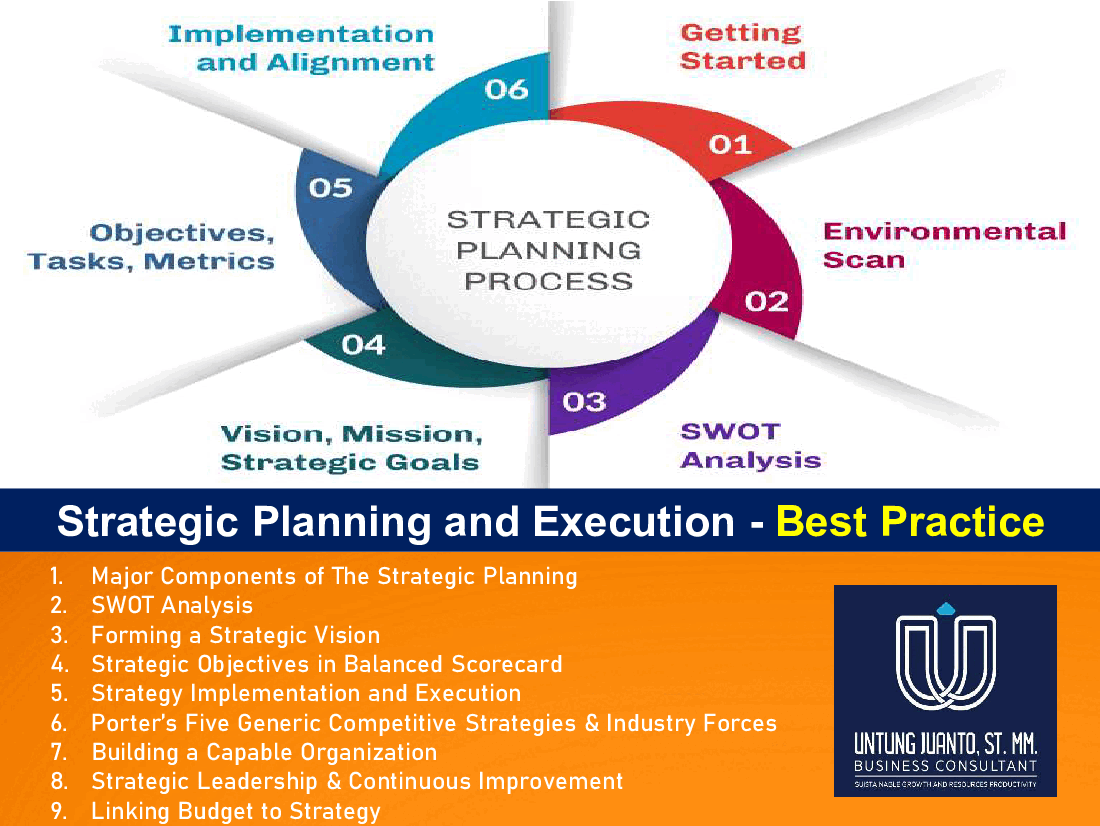
This article will delve into the intricacies of successful business strategy implementation, exploring the essential components, common pitfalls, and practical frameworks that can transform strategic aspirations into tangible achievements. We will uncover how organizations can bridge the execution gap, fostering a culture of action and ensuring their strategic efforts yield the desired competitive advantage.
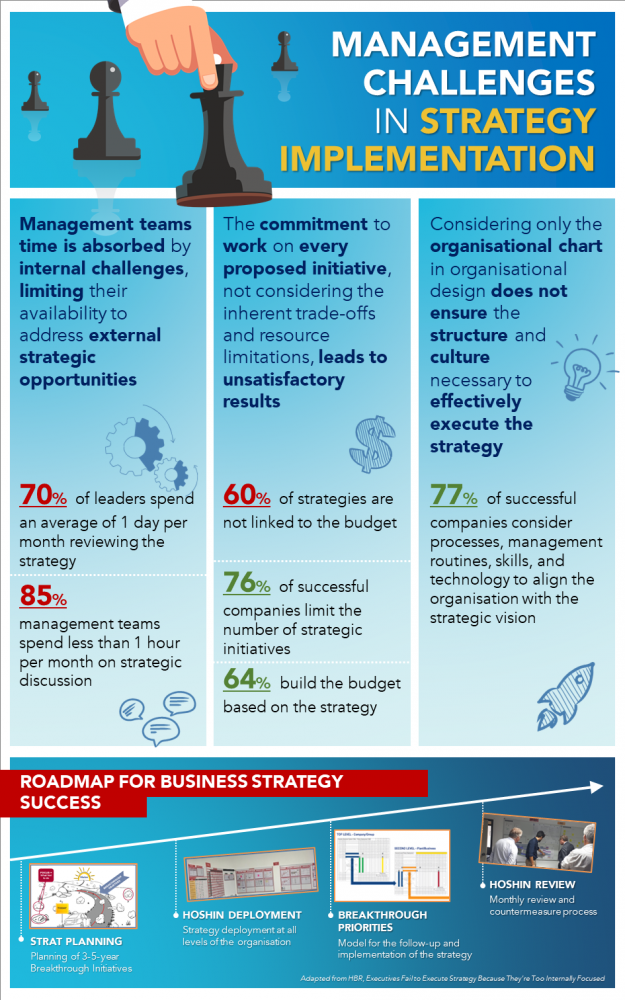
The Chasm Between Strategy and Execution

It's a common lament among business leaders: "We have a great strategy, but we just can't seem to execute it." This observation points to a fundamental truth: strategy is only as good as its implementation. Research consistently shows that a significant percentage of strategies fail to deliver their intended results, with poor execution being a primary culprit. The reasons for this execution gap are manifold and often interconnected, ranging from internal resistance to external market shifts.

One major pitfall is a lack of clarity. If the strategy is not clearly articulated and understood by everyone involved, confusion and misdirection are inevitable. Employees cannot align their efforts if they don't grasp the core objectives or their individual contributions to them. Another frequent issue is insufficient resource allocation. Strategies, no matter how brilliant, require appropriate funding, personnel, and time. Undercapitalizing implementation efforts is a sure path to failure.
Furthermore, a top-down, rigid approach often stifles initiative and adaptability. In today's fast-paced environment, strategies need to be dynamic, allowing for adjustments based on real-time feedback and unforeseen circumstances. Without mechanisms for monitoring progress and making necessary pivots, even well-intentioned plans can quickly become obsolete. Understanding these common pitfalls is the first step toward building a more resilient and effective implementation process.

Key Pillars of Successful Business Strategy Implementation
Effective business strategy implementation relies on several interconnected pillars that support the entire process from inception to realization. Neglecting any one of these can undermine the most meticulously planned initiatives.

Leadership Commitment and Buy-in
Leadership is arguably the most critical pillar. Without unwavering commitment from the top, any strategic initiative is likely to falter. Leaders must not only champion the strategy but also actively participate in its execution, demonstrating a visible dedication to its success. Their role extends to allocating resources, removing roadblocks, and consistently communicating the strategic vision. When leaders walk the talk, it fosters confidence and inspires action throughout the organization.

Clear Communication and Understanding
A well-formulated strategy is useless if it remains confined to the executive boardroom. Transparent and continuous communication is essential to ensure that every employee understands the strategy, its rationale, and their specific role in achieving its goals. This involves not just telling people what to do, but explaining why it's important and how their efforts contribute to the bigger picture. Various channels, from town halls to departmental meetings and internal newsletters, should be utilized to reinforce the message.
Organizational Alignment and Accountability
Successful implementation requires that the entire organization, from departments to individual teams, is aligned with the strategic objectives. This means ensuring that departmental goals, individual performance metrics, and daily operations are all geared towards supporting the overarching strategy. Establishing clear lines of accountability, defining who is responsible for what, and setting measurable objectives for each contributor are vital. This creates a sense of ownership and reduces the likelihood of "it's not my job" syndrome.
Resource Allocation and Management
Strategies are hypotheses about how to win, and they require resources to test and execute. This pillar involves identifying and allocating the necessary financial, human, technological, and time resources. It’s about prioritizing investments that directly support strategic initiatives and, if necessary, divesting from activities that don't. Effective resource management ensures that teams have what they need to perform their tasks without unnecessary bottlenecks or shortages.
Monitoring, Measurement, and Adaptation
Implementation is not a one-time event but a continuous process. Robust systems for monitoring progress, measuring performance against key performance indicators (KPIs), and gathering feedback are essential. This allows organizations to identify what’s working, what’s not, and to make timely adjustments. An agile mindset, embracing iterative development and learning from both successes and failures, is crucial for adapting the implementation process as market conditions or internal capabilities evolve.
A Step-by-Step Framework for Business Strategy Implementation
Translating strategic intent into actionable steps requires a systematic approach. While specific details will vary, the following framework provides a robust guide for effective business strategy implementation.
1. Define Clear, Measurable Objectives (SMART)
Before any action is taken, the strategic objectives must be translated into Specific, Measurable, Achievable, Relevant, and Time-bound (SMART) goals. These provide clarity and a benchmark for success. For instance, instead of "increase market share," a SMART objective would be "achieve a 5% increase in market share in Region X for Product Y by Q4 2025."
2. Develop Detailed Action Plans
Once objectives are clear, break down the strategy into actionable projects and tasks. Each project should have a clear scope, defined deliverables, and specific timelines. These action plans should detail who does what, by when, and with what resources. It's often helpful to visualize these plans using project management tools or Gantt charts.
3. Assign Responsibilities and Empower Teams
Clearly assign ownership for each task, project, and objective. Empower individuals and teams with the authority and resources needed to complete their responsibilities. Decentralizing decision-making where appropriate can speed up execution and foster greater ownership. Cross-functional teams are often essential for complex strategic initiatives.
4. Allocate Necessary Resources
Review the action plans and identify all required resources: budget, personnel, technology, infrastructure, and external expertise. Ensure that these resources are secured and allocated appropriately to avoid bottlenecks and delays. This might involve reallocating existing resources or acquiring new ones.
5. Establish Key Performance Indicators (KPIs)
For each objective and major initiative, establish relevant KPIs that will track progress and measure success. KPIs should be quantifiable and directly reflect the desired outcomes. Regular reporting on these KPIs is crucial for maintaining visibility and accountability.
6. Communicate the Strategy Widely and Continuously
As highlighted earlier, communication is key. Launch the strategy with internal messaging campaigns, workshops, and regular updates. Foster a dialogue, allowing employees to ask questions and provide feedback. Ensure that the 'why' behind the strategy is understood, not just the 'what'.
7. Monitor Progress and Conduct Regular Reviews
Set up a consistent rhythm for monitoring. This could involve weekly team check-ins, monthly departmental reviews, and quarterly leadership evaluations. Compare actual performance against planned targets (KPIs). Identify deviations early and understand their root causes.
8. Adapt, Learn, and Iterate
Based on monitoring and review findings, be prepared to adapt the implementation plan. This might mean adjusting timelines, reallocating resources, refining tactics, or even modifying objectives if external conditions change significantly. Foster a culture of learning where feedback is valued and used to continuously improve the execution process. This iterative approach makes the strategy implementation more resilient and responsive.
Overcoming Common Challenges in Business Strategy Implementation
Despite careful planning, strategic implementation often encounters headwinds. Anticipating and addressing these common challenges proactively can significantly improve success rates.
Resistance to Change
Perhaps the most pervasive challenge is human resistance to change. People are often comfortable with the status quo, and new strategies can disrupt established routines, roles, and power structures. Overcome this through early and continuous communication, involving employees in the change process, addressing concerns directly, and highlighting the benefits of the new strategy for individuals and the organization. Strong leadership sponsorship is vital to demonstrate commitment and alleviate fears.
Lack of Resources or Misallocation
Insufficient budget, lack of skilled personnel, or stretched capacity can cripple implementation. This challenge underscores the importance of a thorough resource assessment during planning. If resources are genuinely limited, strategic choices must be made about what to prioritize. Misallocation can be addressed by strong project management and a willingness to reallocate resources based on performance and evolving needs.
Poor Communication and Misunderstanding
A breakdown in communication leads to confusion, duplication of effort, and misalignment. This can manifest as employees not knowing the strategy, not understanding their role, or receiving conflicting messages. The antidote is multifaceted: consistent messaging from leadership, clear communication channels, opportunities for two-way dialogue, and reinforcing the message through various internal platforms.
Lack of Leadership Buy-in or Inconsistent Support
If leaders are not fully committed or if their support wavers, the entire implementation effort can lose momentum. This problem often stems from a lack of involvement in the strategy formulation process or a failure to grasp the implications of the strategy. Ensuring leaders are part of the journey from the start, providing them with clear roles, and holding them accountable for their parts of the strategy is crucial.
Scope Creep
Strategic initiatives can grow uncontrollably if not managed properly, absorbing more resources and time than initially planned. This "scope creep" can dilute focus and delay completion. Mitigate this by clearly defining the scope of each project upfront, establishing a robust change control process, and regularly reviewing progress against the original plan. Discipline is key to staying focused on the core objectives.
The Role of Culture and Leadership in Effective Implementation
Beyond processes and frameworks, the intangible elements of organizational culture and effective leadership are paramount to successful business strategy implementation. These two factors often dictate the pace, receptiveness, and ultimate success of any strategic shift.
Organizational culture—the shared values, beliefs, and practices—can be either a powerful enabler or a formidable barrier to execution. A culture that values adaptability, collaboration, accountability, and continuous improvement will naturally embrace and facilitate strategic change. Conversely, a culture that is risk-averse, siloed, or resistant to new ideas will present significant hurdles. Leaders must actively cultivate a culture that supports strategic action, often by modeling desired behaviors, recognizing efforts, and celebrating successes that align with the strategy. This involves fostering an environment where experimentation is encouraged, learning from failures is valued, and cross-functional cooperation is the norm.
Leadership’s role extends far beyond merely approving a strategy. Effective leaders act as catalysts for change. They communicate the vision with passion and conviction, inspiring their teams to embrace the new direction. They are visible, actively engaging with employees, listening to concerns, and providing guidance. Crucially, they empower their direct reports and teams, delegating responsibility and providing the necessary resources and support. Leaders also serve as problem-solvers, swiftly addressing obstacles and making tough decisions when needed. Their consistent commitment, transparency, and ability to build trust are fundamental in navigating the complexities of implementation and ensuring sustained momentum.
Tools and Technologies Supporting Business Strategy Implementation
In an increasingly digital world, a variety of tools and technologies can significantly enhance and streamline business strategy implementation. These solutions can improve communication, track progress, manage projects, and provide valuable insights, making the execution process more efficient and data-driven.
Strategy execution software platforms (e.g., OKR software, Balanced Scorecard tools) are designed to link strategic objectives to operational activities. They provide dashboards for monitoring KPIs, facilitate goal setting and cascading throughout the organization, and ensure alignment from top to bottom. These tools bring transparency to the strategy and hold teams accountable.
Project management tools (e.g., Asana, Trello, Jira, Microsoft Project) are invaluable for breaking down large strategic initiatives into manageable tasks, assigning responsibilities, setting deadlines, and tracking progress. They help teams collaborate, share documents, and manage workflows, ensuring that specific projects underpinning the broader strategy are completed on time and within scope.
Communication and collaboration platforms (e.g., Slack, Microsoft Teams, SharePoint) facilitate real-time information exchange and teamwork. They can be used to disseminate strategic updates, conduct virtual meetings, foster cross-functional dialogue, and create central repositories for strategy-related documents. Effective use of these platforms ensures that everyone stays informed and connected, reducing communication silos.
Business intelligence (BI) and analytics tools play a crucial role in monitoring the impact of implemented strategies. By aggregating data from various sources, BI dashboards provide real-time insights into performance against KPIs, market trends, and customer behavior. This data-driven approach allows for quick identification of areas needing adjustment and supports agile decision-making throughout the implementation lifecycle.
Measuring Success: KPIs and Continuous Improvement for Business Strategy Implementation
Measuring the success of business strategy implementation is not an afterthought; it's an integral part of the process that enables continuous improvement and ensures the strategy remains relevant and effective. Without robust measurement, organizations are simply operating on intuition rather than empirical evidence.
The foundation of measurement lies in establishing clear Key Performance Indicators (KPIs) at all levels. These KPIs should be directly linked to the SMART objectives defined in the strategy. For a strategic objective like "increase customer lifetime value by 15%," relevant KPIs might include customer retention rate, average order value, and repeat purchase frequency. It's crucial that KPIs are quantifiable, relevant, and provide actionable insights. They should be regularly tracked and reviewed, ideally through automated dashboards that provide real-time visibility.
Regular review meetings are essential for evaluating progress against these KPIs. These reviews should involve all relevant stakeholders, from front-line teams to senior leadership. They serve as forums to discuss what's working, what's not, identify roadblocks, and collectively brainstorm solutions. This creates a culture of accountability and ensures that issues are addressed promptly rather than festering.
Beyond just tracking numbers, continuous improvement requires a feedback loop. This involves actively soliciting feedback from employees, customers, and other stakeholders about the implementation process and the strategy's impact. Surveys, focus groups, and informal discussions can yield valuable qualitative insights. This feedback, combined with KPI data, informs necessary adjustments to the strategy or its execution plan. An agile approach to strategy, where plans are iteratively refined based on learning and market feedback, rather than being rigidly adhered to, greatly enhances the likelihood of long-term success. The goal is not just to implement a strategy, but to evolve and optimize it over time.
Conclusion
Effective business strategy implementation is the bridge between aspiration and achievement. It transforms well-conceived plans into tangible results, driving growth, fostering innovation, and securing competitive advantage. The journey is rarely linear, often demanding significant leadership commitment, crystal-clear communication, meticulous resource management, and unwavering organizational alignment.
As we've explored, success hinges on overcoming common pitfalls like resistance to change and resource constraints, while leveraging the power of a supportive culture and empowering leadership. By adopting a structured framework, from defining SMART objectives and detailed action plans to establishing robust KPIs and embracing continuous improvement, organizations can significantly enhance their ability to execute. Furthermore, integrating appropriate technologies can streamline processes, improve transparency, and enable data-driven decision-making throughout the implementation lifecycle. Ultimately, mastering business strategy implementation is not just about executing tasks; it’s about fostering an environment where strategic thinking permeates every level, ensuring that plans are not merely drafted, but vibrantly brought to life.