Unlock Profit with Financial Forecasting

Understanding the trajectory of a business's financial future is not merely an exercise in prediction; it's a fundamental pillar of strategic decision-making. Financial forecasting serves as the compass guiding organizations through the complex seas of economic uncertainty, allowing them to anticipate challenges and seize opportunities long before they materialize. It transcends simple guesswork, employing systematic methods and data analysis to project future financial performance, including revenues, expenses, and cash flow. Without this foresight, businesses operate in a reactive mode, constantly playing catch-up and often missing out on significant growth potential or falling prey to avoidable financial distress.

This proactive approach empowers leadership to make informed decisions regarding resource allocation, investment strategies, and operational adjustments. It provides a clear picture of potential liquidity issues, identifies areas for cost optimization, and highlights opportunities for revenue growth. From startups charting their initial course to established corporations navigating competitive landscapes, the accuracy and depth of financial forecasts directly correlate with an organization's resilience and capacity for sustainable growth.

Moreover, effective financial forecasting is indispensable for securing external funding and fostering investor confidence. Lenders and investors scrutinize these projections closely, using them as a primary gauge of a company's viability and future profitability. A well-articulated forecast demonstrates a clear understanding of market dynamics, operational capabilities, and strategic vision, signaling a mature and well-managed enterprise. Conversely, a lack of robust forecasting can deter potential partners and financiers, limiting access to crucial capital.

The process is dynamic, requiring continuous monitoring and adjustment as internal and external conditions evolve. It's not a one-time task but an ongoing commitment to understanding and shaping the financial destiny of an organization. Embracing sophisticated financial forecasting methodologies can transform a company's ability to not only survive but truly thrive, turning potential risks into strategic advantages and unlocking new avenues for profitability.

What is Financial Forecasting and Why is it Crucial?
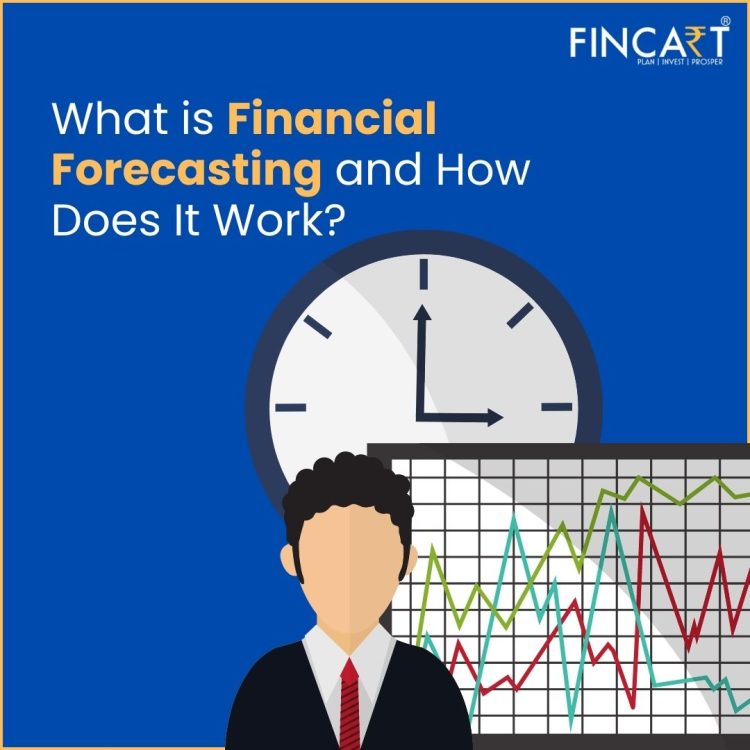
Financial forecasting is the process of estimating a company's future financial performance. It involves projecting revenues, expenses, assets, liabilities, and cash flows over a specified period, typically using historical data, market trends, and economic indicators. Unlike simple budgeting, which often focuses on allocation of existing funds, forecasting aims to predict what will happen financially. It's a forward-looking analysis that provides a basis for strategic planning, budgeting, and resource management. The core objective is to reduce uncertainty and enable proactive decision-making.

The importance of this practice cannot be overstated. Firstly, it provides a roadmap for strategic planning. Businesses use forecasts to set realistic goals, identify potential opportunities for expansion, and pinpoint areas that require attention or restructuring. Without a clear financial outlook, strategic decisions are often made in the dark, leading to inefficient resource allocation and missed targets. Secondly, it is critical for budgeting and resource allocation. Forecasts inform the creation of realistic budgets by providing insights into anticipated income and expenditure, ensuring that resources are allocated efficiently to support operational needs and growth initiatives.
Thirdly, financial forecasting is vital for risk management and mitigation. By anticipating potential shortfalls in cash flow or declines in revenue, companies can take preemptive measures, such as securing additional financing, adjusting operational costs, or deferring non-essential investments. This proactive approach helps avoid liquidity crises and ensures business continuity. Fourthly, it plays a significant role in performance evaluation. Actual financial results can be compared against forecasted figures to assess performance, identify deviations, and understand the underlying reasons. This feedback loop is crucial for continuous improvement and accountability within the organization. Finally, effective forecasting is essential for stakeholder communication and investor confidence. A well-presented financial forecast assures investors, lenders, and other stakeholders of a company's financial health and its capacity to meet future obligations and generate returns.
Key Components and Elements of Financial Forecasting
Effective financial forecasting relies on the accurate projection of several interconnected components. Understanding and meticulously analyzing each element is crucial for building a comprehensive and reliable forecast.
Revenue Forecasting
Projecting future sales and income is often the most critical and challenging aspect of financial forecasting. This involves analyzing historical sales data, identifying seasonal trends, understanding market growth rates, and assessing the impact of pricing strategies and marketing efforts. External factors like economic conditions, industry trends, and competitive landscape also play a significant role. Businesses might use different methods, from simple trend analysis to complex statistical models, to predict future revenue streams for various products or services.
Expense Forecasting
Predicting operational costs is equally important. Expense forecasting involves projecting both fixed costs (like rent, salaries, insurance) and variable costs (like raw materials, utilities, production costs that fluctuate with sales volume). It also includes non-operating expenses such as interest payments. Accurate expense forecasting helps identify areas for cost control and ensures that a company can manage its overhead efficiently as revenue changes.
Cash Flow Forecasting
Perhaps the most critical component, cash flow forecasting tracks the movement of cash into and out of the business. It encompasses anticipated cash receipts from sales, investments, and financing activities, as well as cash disbursements for expenses, debt repayments, and capital expenditures. A robust cash flow forecast helps identify potential liquidity issues before they arise, ensuring a company has enough cash to meet its short-term obligations and capitalize on opportunities. It is distinct from profit forecasting, as profitability does not always equate to sufficient cash on hand.
Balance Sheet Projections
While less commonly discussed in isolation, projecting the balance sheet is an integral part of comprehensive financial forecasting. This involves estimating future assets (cash, accounts receivable, inventory, fixed assets) and liabilities (accounts payable, short-term debt, long-term debt), as well as equity. Balance sheet projections ensure that the forecasted income statement and cash flow statement are consistent and that the company's financial position remains stable and healthy.
Capital Expenditure and Financing Needs
Forecasting future investments in assets like property, plant, and equipment (capital expenditures or CapEx) is crucial for long-term planning. Simultaneously, businesses must forecast their financing needs – whether they will require external funding (debt or equity) to support growth initiatives, operational gaps, or capital investments. This involves assessing current debt levels, available credit lines, and the cost of capital.
Methods and Techniques for Financial Forecasting
The methodology chosen for financial forecasting depends on the availability of data, the desired level of accuracy, and the specific context of the business. Both qualitative and quantitative approaches are utilized.
Quantitative Forecasting Methods
These methods rely on historical data and statistical analysis to predict future outcomes.
* Time Series Analysis: This involves analyzing past data points collected over a period to identify patterns, trends, and seasonal variations. Techniques include moving averages, exponential smoothing, and ARIMA models (AutoRegressive Integrated Moving Average). These are particularly effective for stable businesses with extensive historical data.
* Regression Analysis: This statistical method identifies the relationship between a dependent variable (e.g., sales) and one or more independent variables (e.g., advertising spend, GDP, population growth). Simple linear regression involves one independent variable, while multiple regression uses several. This helps in understanding causal relationships and predicting outcomes based on changes in influencing factors.
* Econometric Models: More complex than simple regression, these models incorporate economic theories and multiple variables to forecast financial metrics. They consider broader economic indicators and their impact on specific business outcomes.
Qualitative Forecasting Methods
When historical data is scarce, unreliable, or when significant market shifts are anticipated, qualitative methods become essential. These rely on expert opinions, judgment, and subjective assessments.
* Delphi Method: This technique involves soliciting forecasts from a group of experts anonymously, then providing them with summarized feedback from the group, allowing them to revise their estimates. This iterative process aims to converge on a consensus forecast while minimizing bias.
* Market Research: Gathering information directly from customers, suppliers, and competitors can provide valuable insights into future demand, market trends, and competitive landscapes. Surveys, focus groups, and interviews are common tools.
* Jury of Executive Opinion: Involves collecting and combining the opinions of high-level executives within the company regarding future sales or market conditions. While quick, it can be prone to individual biases.
* Scenario Analysis: This involves developing several different financial forecasts, each based on a different set of assumptions about future economic conditions or strategic choices (e.g., best-case, worst-case, and most likely scenarios). This helps in understanding the range of possible outcomes and preparing for various eventualities.
Benefits of Effective Financial Forecasting
Implementing robust financial forecasting practices offers a multitude of advantages that can significantly impact a company's bottom line and long-term viability.
Enhanced Strategic Planning and Decision-Making
Forecasts provide the data-driven foundation for setting realistic strategic goals, whether it's expanding into new markets, developing new products, or optimizing operational efficiency. With a clear view of potential future performance, executives can make more confident and effective decisions regarding investments, divestitures, and overall business direction. It allows companies to be proactive rather than reactive.
Improved Resource Allocation and Budgeting
By anticipating future cash inflows and outflows, businesses can allocate capital more efficiently. This means optimizing inventory levels, planning for staffing needs, and investing in high-return projects. Forecasts directly inform the budgeting process, ensuring that financial resources are aligned with strategic priorities and that budgets are both ambitious and achievable.
Proactive Risk Management and Mitigation
One of the most powerful benefits of financial forecasting is its ability to identify potential financial risks before they escalate. Companies can foresee cash flow shortages, potential revenue declines, or increasing costs, allowing them to implement preventative measures such as securing additional lines of credit, adjusting pricing strategies, or cutting non-essential expenses. This foresight minimizes the likelihood of financial distress and ensures business continuity.
Increased Investor Confidence and Access to Capital
Lenders and investors view a well-prepared financial forecast as a testament to a company's strong management and clear vision. It demonstrates a deep understanding of market dynamics and a credible plan for future growth and profitability. This transparency and foresight significantly increase a company's attractiveness to potential funders, making it easier to secure loans, equity investments, and other forms of capital necessary for growth.
Performance Monitoring and Accountability
Forecasts serve as benchmarks against which actual performance can be measured. Regular comparison of actual results to forecasted figures allows management to identify variances, understand the underlying causes of deviations, and hold departments or individuals accountable. This feedback loop is essential for continuous improvement, learning from past performance, and refining future strategies.
Optimized Operational Efficiency
By predicting demand and resource needs, businesses can optimize their supply chain, production schedules, and workforce planning. For example, accurate sales forecasts can lead to optimized inventory levels, reducing carrying costs and minimizing stockouts. This operational efficiency directly translates into cost savings and improved customer satisfaction.
Challenges in Financial Forecasting
Despite its undeniable benefits, financial forecasting is not without its hurdles. Several factors can impede the accuracy and reliability of projections, requiring forecasters to be diligent and adaptive.
Data Accuracy and Availability
The foundation of any good forecast is reliable data. Inaccurate, incomplete, or inconsistent historical data can lead to flawed projections. Moreover, for new businesses or those entering rapidly evolving markets, historical data may be scarce or irrelevant, forcing reliance on less precise qualitative methods. The challenge lies in ensuring data integrity and access.
Volatility and Uncertainty in the Market
External factors such as economic downturns, unexpected market shifts, technological disruptions, new competitors, and geopolitical events can significantly impact financial performance in unpredictable ways. The more volatile the market, the harder it is to make accurate long-term forecasts. Global events, like pandemics or supply chain crises, exemplify how rapidly the economic landscape can change, rendering previous forecasts obsolete.
Dependence on Assumptions
Every financial forecast is built upon a series of assumptions about future conditions, such as sales growth rates, inflation rates, interest rates, and commodity prices. If these assumptions prove to be incorrect, the entire forecast can be skewed. The challenge is to make the most reasonable assumptions based on available information and to understand the sensitivity of the forecast to changes in these assumptions.
Internal Biases and Over-Optimism
Human judgment plays a role in forecasting, and this can introduce biases. Management might be overly optimistic about future sales or too conservative about costs, leading to skewed projections. Over-optimism can lead to over-investment and liquidity issues, while excessive conservatism might lead to missed growth opportunities. Objectivity is crucial.
Complexity of Business Operations
For large, diversified companies with multiple product lines, geographical markets, and complex cost structures, integrating all variables into a cohesive and accurate forecast can be incredibly challenging. The interdependencies between different departments and revenue streams add layers of complexity, requiring sophisticated modeling techniques and careful coordination.
Time and Resource Constraints
Developing comprehensive and accurate financial forecasts requires significant time, skilled personnel, and often specialized software. Smaller businesses, in particular, may lack the internal resources or expertise to dedicate to robust forecasting, leading to simpler, less precise methods.
Implementing an Effective Financial Forecasting Process
Establishing a systematic and adaptive financial forecasting process is key to overcoming challenges and maximizing benefits.
1. Define Objectives and Scope
Before diving into numbers, clearly articulate what the forecast aims to achieve. Is it for short-term liquidity management, long-term strategic planning, or investor relations? Define the time horizon (e.g., 3 months, 1 year, 5 years) and the level of detail required for each financial statement (income statement, cash flow, balance sheet).
2. Gather and Clean Data
Collect relevant historical financial data (sales, expenses, balance sheets, cash flows) and operational data (customer acquisition costs, production volumes). Crucially, ensure the data is accurate, consistent, and free from errors. Inaccurate data is the fastest way to undermine a forecast's reliability.
3. Choose Appropriate Methods and Tools
Based on the objectives, data availability, and the nature of the business, select the most suitable forecasting methods (quantitative, qualitative, or a blend). Consider leveraging financial modeling software or advanced spreadsheet tools to manage the complexity and calculations efficiently.
4. Develop Assumptions
This is a critical step. Research and establish a logical set of assumptions for key drivers such as sales growth rates, pricing, cost of goods sold, operating expenses, inflation, and interest rates. Involve various departments (sales, marketing, operations) to ensure assumptions are realistic and comprehensive. Document all assumptions clearly.
5. Build the Financial Model
Construct the financial model, typically starting with revenue projections, followed by expense forecasts. Then, integrate these into the income statement, cash flow statement, and balance sheet. Ensure that the three statements are interlinked and reconcile properly.
6. Conduct Scenario Analysis
Don't just create one forecast. Develop multiple scenarios (e.g., base case, optimistic, pessimistic) by adjusting key assumptions. This provides a range of potential outcomes and helps assess the business's resilience under different conditions. Sensitivity analysis, which examines how changes in a single variable impact the forecast, is also valuable.
7. Review, Validate, and Iterate
Once the initial forecast is complete, review it thoroughly with relevant stakeholders. Compare it against past forecasts and actual performance. Validate assumptions and make adjustments as needed. Financial forecasting is an iterative process; it's not a static document but one that should be continuously monitored, updated, and refined as new information becomes available and market conditions evolve.
Conclusion
Financial forecasting is far more than a mere numerical exercise; it is an indispensable strategic tool that empowers businesses to navigate the future with confidence and precision. By systematically projecting revenues, expenses, and cash flows, organizations gain the foresight necessary to make informed decisions, allocate resources effectively, and proactively manage risks. The ability to anticipate challenges and opportunities through robust forecasting directly contributes to enhanced profitability, sustainable growth, and a stronger competitive position.
While challenges such as data accuracy, market volatility, and inherent biases exist, the benefits of developing a sophisticated forecasting capability far outweigh the difficulties. Embracing diverse methodologies, meticulously gathering data, and fostering a culture of continuous review and adaptation are key to building reliable forecasts. Ultimately, mastering financial forecasting transforms a business from a reactive entity into a proactive powerhouse, capable of not only surviving economic shifts but thriving amidst them, unlocking significant profit potential along the way.